
In today’s digital age, a law firm’s website serves as its virtual storefront. Before a potential client picks up the phone or sends an email inquiry, they are likely to browse the firm’s online presence to gauge its credibility, expertise, and values.
As such, the design and layout of a law firm’s website can make or break that all-important first impression. While there is an undeniable emphasis on aesthetics, the best law firm websites prioritize their clients’ needs and concerns. A client-centric approach to web design is not just about aesthetics; it is about building trust, conveying expertise, and showcasing a genuine commitment to serving the client’s best interests.
In this blog, we will shed light on how law firms can create client-focused law firm websites that not only attract new customers but also engage, inform and reassure prospective clients.
We will cover the following topics:
- Understanding Your Clients
- Key Features of a Client-Focused Website
- Building Trust Through Transparency
- Continuous Engagement Strategies
- Monitoring and Adapting
- The Importance of Involving a Law Firm Marketing Agency
- Why Choose Creative Counsel as Your Expert Legal Marketing Agency

#1: Understanding Your Clients
At the heart of any successful law firm is a profound understanding of its clients. Creating a client-focused website is more than just about aesthetics; it is about creating an online space where potential clients feel seen, heard, and understood. Achieving this requires an in-depth grasp of who your clients are, what challenges they face, and what they seek from your legal services.
Here’s how to deepen that understanding:
➡️ Creating Client Personas:
- Every client is unique, but they often share common traits, needs, and concerns. Crafting detailed client personas allows you to visualize your typical client, and understand their demographics, pain points, goals, and preferences.
- For a personal injury law firm, for instance, one persona might be a middle-aged construction worker injured on the job. Another could be a young mother involved in a car accident. By picturing these personas, you can tailor your law firm’s website messaging and design to speak directly to their core needs and concerns.
➡️ Feedback is a Goldmine:
- Your current clients are a treasure trove of insights. They have already navigated your website, interacted with your law firm, and formed perceptions. By actively seeking their feedback, you can uncover aspects of your website that work well and areas that might be creating friction.
- Tools like online surveys, feedback forms, or even direct interviews can provide invaluable information. By addressing these concerns, you not only refine your website but also show clients that you value their feedback and are committed to continuous improvement.
➡️ Empathy Mapping:
- Law, by its nature, often deals with deeply personal and emotive issues. Understanding the emotional journey of your clients is essential. Empathy mapping helps you chart out the various emotions, fears, and aspirations a client might have when seeking legal services.
- For instance, someone seeking a divorce attorney might be feeling a mix of anxiety, confusion, hope, and fear for the future. Your law firm website’s content, imagery, and tone can be tailored to acknowledge these emotions, offering assurance, clarity, and support.
➡️ Client Journey Analysis:
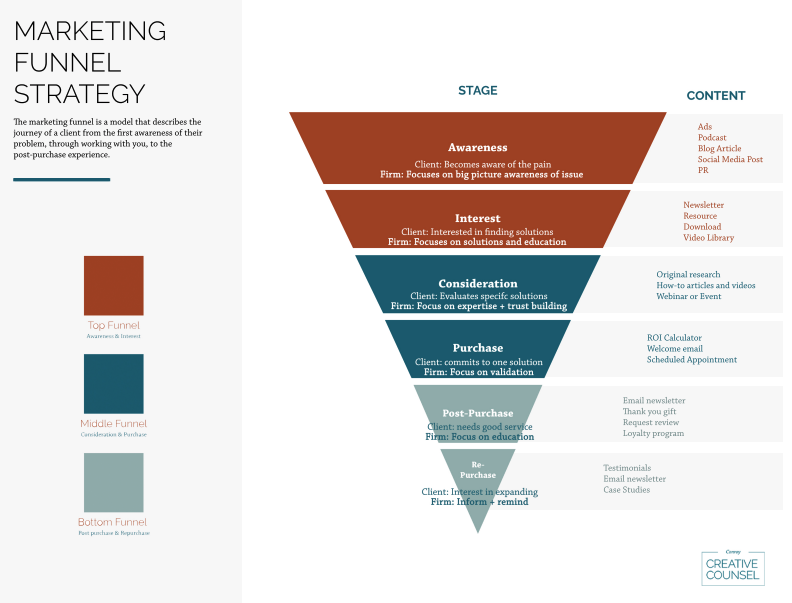
- Every potential client follows a journey from recognizing a need to researching solutions, and finally, making a decision. Recognizing this journey and its various stages allows you to position your website as a guiding beacon.
- For instance, for someone in the early stages of legal inquiry, informative blog posts or FAQs can offer clarity. For those closer to making a decision, easy-to-find contact information, client testimonials, and clear calls to action can offer the final nudge.

In essence, understanding your clients isn’t just about demographics or data. It is about tapping into their emotions, needs, and journey. It is this deep understanding that transforms a generic website into a client-focused portal, one that resonates, builds trust, and fosters engagement.
#2: Key Features of a Client-Focused Website
For a law firm website to truly be client-focused, it should seamlessly intertwine functionality with empathy, clarity, and trust. Such a website doesn’t merely list the services of the firm; it also communicates a promise of expertise, understanding, and commitment.
Here are the essential features that can help convey this message:
➡️ Accessibility and Responsiveness:
- Mobile Optimization: In today’s age, a significant portion of users access websites via mobile devices. Law firms must ensure that their website offers a consistent and user-friendly experience across all devices – desktop, tablet, or smartphone.
- Easy Navigation: Clients should be able to find what they are looking for without hassle. A streamlined menu, clear sections, and an intuitive law firm website design all contribute to a positive user experience.
- ADA Compliance: Ensure that your website is accessible to all users, including those with disabilities. Use readable fonts, provide text descriptions for images, and consider voice-over options.
➡️ User-friendly Navigation:
- Clear CTAs (Call-to-Action): Direct users to the next steps, whether it is contacting your law firm, reading a client testimonial, or downloading a resource.
- Search Functionality: This allows users to quickly search for specific information on your law firm’s website, making their experience more efficient.
➡️ Clear and Concise Content:
- Avoid Legal Jargon: Many law firm websites overlook this but it is essential to use plain language that resonates with the average person. Your goal is to inform, not overwhelm.
- Highlight Practice Areas: Clearly describe what your law firm specializes in, and list the legal services you offer, ensuring potential clients can quickly ascertain if you can assist with their specific issue.
- Engaging Blog: A good law firm website regularly releases blogs or articles that address common and current legal questions or concerns, showcasing your law firm’s expertise and providing value to visitors.
➡️ Engaging Visuals:
- Professional Imagery: Use high-quality, relevant images that align with your law firm’s brand and message.
- Infographics: Break down complex legal concepts with visual aids, making them more digestible for clients.
- Videos: Consider creating video content – interviews with lawyers, client testimonials, or explanations of legal processes.
➡️ Client Testimonials and Reviews:
- Showcase Success Stories: Let satisfied clients share their experiences, lending credibility to your services.
- Integrate Reviews: If you have positive reviews on platforms like Google or Yelp, consider integrating them into your own law firm website.
➡️ Secure and Fast Website:
- SSL Certificate: Ensure your website is secure, especially if you are collecting client data. An SSL certificate also boosts your SEO rankings.
- Optimized Load Times: A slow attorney website can deter prospective clients. Regularly check and optimize your website’s speed.

A client-focused website is an evolving entity, shaped by changing client needs, technological advances, and the law firm’s growing expertise. Incorporating these features sets the foundation for a site that’s not just informative, but one that resonates, engages, and converts into customers. For more insight into this topic, check out our Counsel Cast podcast on How Do You Evolve Your Firm With Design.
#3: Building Trust Through Transparency
Trust is a cornerstone of any attorney-client relationship. Prospective clients, often navigating extremely personal and sensitive issues, seek assurance that their legal matters will be handled with the utmost professionalism, care, and integrity. A law firm’s website can play a pivotal role in fostering this trust, therefore, transparency is the key.
Here’s how to weave transparency into your online presence:
➡️ Display Credentials and Accolades:
- Highlight Qualifications: Ensure that attorney profiles showcase their education, qualifications, years of experience, and any specializations. This provides clients with a clear picture of the expertise housed within your firm.
- Showcase Awards and Recognitions: If your firm or any of its attorneys have received awards or recognitions, prominently display them. Such accolades offer third-party validation of your expertise and dedication.
➡️ Clear Fee Structures and Processes:
- Transparent Pricing: If possible, provide clear information about your fee structures – be it hourly rates, fixed fees, or contingent fees. This helps clients understand potential costs and eliminates unexpected surprises.
- Clarify Processes: Explain the typical legal process a client might undergo, from initial consultation to case resolution. Setting clear expectations can alleviate anxieties and questions about the journey ahead.
➡️ Addressing Common Client Concerns:
- FAQ Section: Dedicate a section of your website to answer frequently asked questions. This not only positions you as a helpful resource but also showcases your understanding of client concerns.
- Resources and Articles: Publish content that dives into common concerns or misconceptions in your area of practice, be that family law articles, business law, workplace law, corporate law, immigration law, personal injury or other. This reinforces your role as an expert in the field and a guide and makes your law firm stand out among competitors.
➡️ Open Channels of Communication:
- Easy Contact Access: Ensure that contact details – phone numbers, email addresses, and physical location addresses – are easily accessible. Consider integrating live chat options or chatbots to answer queries in real time.
- Response Time: Highlight your commitment to responding within a certain timeframe. Prompt communication can be a significant factor in building trust.
➡️ Ethical Commitments:
- Code of Ethics: Consider sharing your law firm’s code of ethics or values. Detailing the principles that guide your practice can resonate deeply with clients seeking a trustworthy legal partner.
- Client Confidentiality: Emphasize your commitment to client confidentiality, detailing the steps you take to protect sensitive information.

In an industry where clients are entrusting not just legal cases, but often deeply personal stories and challenges, trust is paramount. A transparent approach, where clients feel informed, understood, and valued, lays the foundation for lasting and impactful attorney-client relationships. Our Counsel Cast podcast on Designing Trust: How Lawyers Can Build Credibility Through Website Design, offers valuable insights and tips on this topic.
#4: Continuous Engagement Strategies
Keeping potential and existing clients engaged is not a one-off task, but a consistent effort. The legal industry, given its nature, requires regular touchpoints to assure clients of your presence, expertise, and commitment.
Here are some strategies to ensure that your law firm’s website doesn’t just attract, but also maintains engagement over time:
➡️ Dynamic Content Updates:
- Regular Blogging: Regularly update your blog with content that addresses current legal trends, case studies, and informational articles. This keeps visitors coming back for fresh insights.
- News and Updates: Feature a section for your own law firm news, case victories, or legislative updates, ensuring your website feels up-to-date and relevant.
➡️ Interactive Features:
- Webinars and Workshops: Organize online events that delve deeper into specific legal topics. This positions your firm as a thought leader and offers an interactive platform for engagement.
- Q&A Sessions: Host periodic Q&A sessions where clients can get their generic questions addressed. This can be done through live streams, integrated chat features and even podcasts.
➡️ Newsletter Sign-ups:
- Regular Newsletters: Offer visitors the option to sign up for a regular newsletter, ensuring they stay updated with the latest from your firm.
- Segmented Content: Customize newsletter content based on client interests or previous interactions, making the information more relevant to them.
➡️ Social Media Integration:
- Shareable Content: Create content that readers can easily share on their social media platforms, expanding your reach.
- Active Social Media Presence: Maintain active profiles on platforms relevant to your target audience, and embed these feeds on your website.
➡️ Client Portals:
- Secure Access: Offer existing clients a secure portal where they can access case updates, and documents, or communicate directly with their attorneys.
- Notifications: Implement a notification system to inform clients of any updates or new content relevant to their cases or interests.
➡️ Feedback Mechanisms:
- Surveys: Regularly seek feedback on your services, content, and website features. This not only provides insights for improvement but also conveys to clients that their opinions are valued.
- Comments and Discussions: Allow for comments on your blog posts or articles, fostering a community and encouraging discussions.

Engagement is all about connection. By offering consistent value, interactivity, and avenues for communication, you can keep clients engaged, reinforcing their decision to choose your law firm while also attracting potential clients. Continuous engagement transforms your website from a static information hub to a dynamic platform for dialogue, growth, and relationship-building.
#5: Monitoring and Adapting
In the digital age, a static approach rarely yields long-term results. The most effective law firm websites are those that constantly evolve, adapting to the changing needs of their clientele and the larger digital landscape. Monitoring performance and being flexible in your approach are essential.
Here’s how to ensure your website remains agile and effective:
➡️ Analytics are Your Best Friend:
- Traffic Analysis: Regularly review which pages on your website are getting the most visits. This can inform which areas of your practice are drawing interest and where potential clients spend their time.
- Behavior Flow: Utilize tools to understand the journey users take through your site. This can highlight areas of drop-offs or where users might be getting confused.
➡️ Conversion Tracking:
- Form Submissions: Monitor the number of inquiries or consultations booked through your website. If numbers are dwindling, you might need to reevaluate your CTAs or the information you are providing.
- Engagement Metrics: Keep an eye on metrics like page views per visit, average session duration, and bounce rates. These can give insights into how engaged users are with your content.
➡️ Regularly Update Based on Feedback:
- Client Feedback: Actively seek out and be open to feedback from clients. They can offer invaluable insights into what’s working and what isn’t.
- Testimonials: Updated and recent testimonials can keep your website feeling fresh and authentic. Encourage satisfied clients to provide feedback and feature these prominently.
➡️ Keep Up with Technology and Design Trends:
- Mobile-First Approach: With increasing mobile usage, ensure your website is optimized for mobile viewing and interaction.
- Visual Trends: Modernize your website’s design periodically to keep it looking current and appealing.
➡️ SEO (Search Engine Optimization) Review:
- Keyword Analysis: Ensure that your content is optimized for relevant keywords. As legal trends and client needs change, the search queries they use might also evolve.
- Backlink Audit: Regularly audit your backlinks to ensure that you have quality links pointing to your website. This can impact your search engine ranking.
➡️ Security Checks:
- Regularly Update: Ensure that your website platform, plugins, and any third-party tools are always updated to the latest versions. This helps in patching vulnerabilities and keeping your site secure.
- SSL and Compliance: Regularly renew your SSL certificate and ensure that any data collection is in compliance with privacy laws.

In summary, a successful law firm website isn’t a “set it and forget it” project. It requires continuous attention, reflection, and iteration. By actively monitoring and adapting, you ensure that your website remains an effective, user-friendly, and secure platform that resonates with both current and potential clients.
#6: The Role of a Law Firm Marketing Agency
In an age where digital presence and strategic branding have become cornerstones of business growth, the legal industry is no exception. While law firms excel in providing expert legal counsel, crafting an effective marketing strategy requires a different set of skills. This is where the expertise of a law firm marketing agency comes into play.
Here’s why their involvement is paramount:
➡️ Time Constraints:
- Attorneys and law firm staff often have packed schedules filled with client meetings, court appearances, research, and case preparations. Adding marketing tasks to this list can be overwhelming. A specialized legal marketing agency can take on this role, allowing the firm to focus on practising law.
➡️ Industry-Specific Expertise:
- Law firm marketing agencies have tailored experience in addressing the unique challenges and nuances of the legal industry. They understand the regulations, ethical considerations, and specific client needs inherent in legal marketing.
➡️ Crafting the Right Message:
- Legal matters can be complex and intimidating. Marketing agencies can distil this complexity into clear, compelling messages that resonate with potential clients, positioning the law firm as both an expert and a trusted guide.
➡️ Brand Positioning:
- With countless law firms vying for attention, standing out is crucial. A marketing agency can help law firms identify and amplify their unique value proposition, ensuring they resonate distinctly in a saturated market.
➡️ Digital Expertise:
- Most clients start their search for legal services online. A marketing agency can optimize a law firm’s digital presence – from law firm web design, SEO, and PPC advertising to managing online reviews – ensuring the firm is easily discoverable and appealing to potential clients.
➡️ Data-Driven Decisions:
- Beyond crafting messages, effective marketing requires analyzing campaign results to refine strategies. Marketing agencies utilize advanced analytics tools to ensure every marketing dollar is well-spent and strategies are continuously optimized.
➡️ Staying Ahead of Trends:
- The digital landscape is in constant flux, with new platforms, technologies, and trends emerging regularly. Marketing agencies are attuned to these shifts, ensuring that law firms remain ahead of the curve and continue to engage their audience in relevant and innovative ways.
➡️ Risk Mitigation:
- Ensuring that marketing efforts adhere to legal industry standards is crucial. A misstep can lead to reputational damage or even legal consequences. Specialized agencies navigate these waters with expertise, ensuring compliance and integrity.
➡️ Consistent Branding:
- From the tone of content and the design of materials to the platforms used, consistency is key to brand recognition. Specialized marketing agencies ensure that all marketing efforts present a cohesive and consistent image of the law firm.
➡️ Network Access:
- Established marketing agencies have robust networks, including media contacts and partnership opportunities. By involving an agency, law firms can tap into these networks, broadening their reach and influence.
➡️ Cost-Efficiency:
- While it may seem cost-effective for firms to handle marketing internally, the learning curve and time investment often outweigh the benefits. Engaging a marketing agency can lead to more streamlined and effective marketing efforts, ultimately offering better ROI.

In conclusion, the fast-paced and demanding nature of legal work often leaves little room for law firms to delve deep into marketing strategies. Involving a law firm marketing agency ensures that while legal professionals dedicate their time to serving clients, the firm’s growth and visibility are expertly handled in the background.
#7: Why Choose Creative Counsel as Your Expert Legal Marketing Agency
To stand out and effectively engage potential clients, law firms need a sophisticated, client-focused online strategy. This is where the specialized expertise of Conroy Creative Counsel comes into play to help with law firm website branding, design, and strategic marketing.
We offer the following services to law firms:
✅ Industry Expertise:
- With a specialization in law firm marketing, we, at Conroy Creative Counsel, ensure strategies are precisely tailored to address the unique needs and regulatory challenges of the legal industry.
✅ Award-Winning Design:
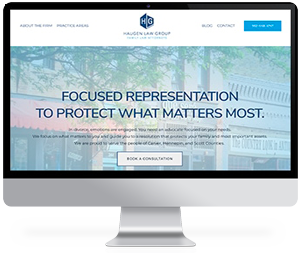
- We don’t just design websites; we make them cutting-edge. With an award-winning portfolio, such as the redesign showcased in our Haugen Law case study, we have demonstrated our prowess in creating visually stunning and user-friendly sites that resonate with potential clients.
✅ Comprehensive Services:
- From captivating website design and effective SEO to engaging content marketing, our all-encompassing range of services guarantees a cohesive and consistent digital marketing strategy for law firms.
✅ Client-Centric Approach:
- Understanding the pivotal role of a client-focused online presence, we craft marketing strategies that are keenly attuned to potential clients’ needs, questions, and concerns.
✅ Strategic Vision:
- Our approach goes beyond just design and branding. We prioritize strategic marketing, ensuring that beautifully designed platforms also drive tangible results in terms of engagement, leads, and conversions.
✅ Custom Solutions:
- Every law firm has its ethos and unique selling points. Recognizing this, we offer bespoke solutions that mirror the individual branding, values, and objectives of each law firm we partner with.
✅ Staying Current:
- Digital trends shift rapidly. With our expertise, law firms can rest easy knowing their online strategies are up-to-date, leveraging the latest in digital marketing trends and technologies.
✅ Transparency and Collaboration:
- Building a lasting partnership is founded on trust. With clear communication, regular updates, and collaboration, we ensure that law firms are integral to the strategy process, fostering transparency and mutual trust.
✅ Testimonials and Reviews:
- Our strong reputation in the industry, backed by positive reviews and client testimonials, stands as a testament to our expertise and results-driven approach.
✅ Integrated Marketing:
- Digital marketing isn’t one-dimensional. By adopting a holistic strategy that encompasses SEO, PPC, content marketing, and social media, we ensure a unified and harmonized brand message across all platforms.

In a competitive legal market, the right digital partner can be the difference between blending in and standing out. We believe that our combination of industry know-how, design expertise, and holistic approach, makes us an invaluable ally for any law firm aiming to elevate their digital footprint and effectively connect with their audience.
Contact Us Today
Are you ready to elevate your law firm’s online presence, engage more effectively with potential clients, and drive results?
The digital realm holds immense potential for law firms. All you need is the right partner to guide you through the process. With our expertise and tailored approach, your legal practice will be able to harness the full potential of your digital landscape.
Contact us today, and let’s embark on this transformative journey together.